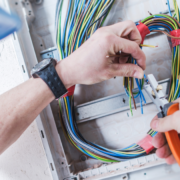
What Happens During a Cabling Health Check?
Your business might rely on dozens – sometimes hundreds – of laptops, printers, CCTV cameras, VoIP phones, and Wi-Fi access points. But every one of those devices depends on something you rarely see: the cabling behind the walls.
Over time, even well-installed networks can degrade. Cables get damaged, standards change, offices evolve, and what once worked perfectly can quietly fall out of compliance. That’s where a cabling health check comes in.
A cabling health check is one of the most effective ways to identify hidden problems before they cause downtime, slow performance, or costly emergency repairs. In this post, we’ll explain exactly what happens during a cabling health check, when you should book one, and how it helps protect the long-term performance and safety of your network.

What Is a Cabling Health Check?
A cabling health check is a professional assessment of your structured cabling infrastructure. It covers everything that carries data through your building, including:
-
Fixed data cabling (Cat5e, Cat6, Cat6a, fibre)
-
Patch panels and patch leads
-
Network cabinets and racks
-
Cable containment and routing
-
Terminations, labelling, and documentation
Think of it like a full service for your network infrastructure. Your systems may appear to be working, but a health check ensures they’re operating as efficiently, safely, and compliantly as possible.
Certified engineers inspect, test, and document the condition of your cabling to confirm it meets current performance standards and fire safety regulations.

Why a Cabling Health Check Matters
Even the best cabling installations don’t last forever. Networks are affected by heat, electrical interference, physical movement, and everyday wear and tear — often without any obvious warning signs.
A cabling health check can uncover issues such as:
-
Outdated Cat5e cabling limiting network speed
-
Loose or poorly terminated connections
-
Damaged patch leads causing intermittent faults
-
Overcrowded trunking restricting airflow
-
Electrical interference from nearby power cables
-
Fire safety risks from non-LSZH materials
-
Inconsistent or missing labelling
Left unaddressed, these small issues can snowball into major network failures. A health check allows you to fix problems proactively, rather than reacting when something breaks.
What’s Included in a Cabling Health Check?
A professional cabling health check typically covers five core areas.
1. Visual Inspection
The engineer begins with a thorough visual review of your network infrastructure. This includes inspecting:
-
Network cabinets and server racks
-
Patch panels and patching layout
-
Cable containment, trays, and trunking
-
Signs of overheating, crushing, or strain
-
General cable management and airflow
Messy or overcrowded cabinets don’t just look unprofessional — they increase heat buildup, make faults harder to trace, and raise the risk of accidental disconnections.
2. Testing and Certification
Cabling is then tested using professional Fluke testing equipment to verify performance against recognised standards.
Tests typically include:
-
Wire mapping (to confirm correct pin-outs)
-
Signal loss (attenuation)
-
Crosstalk and electromagnetic interference
-
Return loss
-
Bandwidth and data integrity
This confirms whether your cabling is capable of supporting modern network speeds and devices — and highlights any failing or marginal runs.
3. Labelling and Documentation Review
Clear labelling is essential for maintaining a reliable network. During a cable health check, engineers review:
-
Patch panel labels
-
Wall outlet identification
-
Cabinet port numbering
-
Existing cabling documentation
Any missing, incorrect, or confusing labels are flagged – and often corrected – to ensure future maintenance is fast and error-free.
4. Compliance and Fire Safety Assessment
Modern cabling standards place a strong emphasis on fire safety. As part of the health check, installers assess:
-
Use of LSZH (Low Smoke Zero Halogen) materials
-
CPR (Construction Products Regulation) compliance
-
Separation of power and data cabling
-
Proper containment and fixing methods
Older PVC cables may still function, but they can release toxic smoke and corrosive gases in a fire. Identifying these risks early is critical for safety and compliance.
5. Performance Report and Recommendations
After the inspection and testing, you receive a clear written report detailing:
-
Test results and pass/fail outcomes
-
Current condition of your cabling
-
Identified risks or performance limitations
-
Recommended remedial work or upgrades
-
Guidance on future-proofing (e.g. Cat6a or fibre)
This allows you to plan improvements strategically, rather than responding to emergencies.

How Often Should You Book a Cabling Health Check?
For most businesses, a cabling health check is recommended every three to five years. You should consider booking one sooner if:
-
You’ve moved into a new premises
-
You’ve taken over an existing network
-
Your office layout has changed
-
You’ve added new equipment or Wi-Fi access points
-
You’re experiencing unexplained network issues
-
Your cabling is more than 10 years old
In critical environments such as data centres, healthcare, education, or hospitality, annual inspections are often advisable.
The Benefits of Regular Cabling Health Checks
Regular cabling health checks deliver long-term value:
-
Reduced downtime – problems are caught before they disrupt operations
-
Improved performance – your network runs at the speed it should
-
Lower costs – fewer emergency call-outs and surprise failures
-
Compliance confidence – reassurance around safety and standards
-
Future readiness – clarity on when upgrades will be needed
Most importantly, a health check gives you visibility. You know exactly where you stand — and what to do next.
FAQs: Cabling Health Checks
Q1: How long does a cabling health check take?
For small offices, a few hours is often sufficient. Larger or multi-floor sites may take a full day or more, depending on the number of outlets and cabinets.
Q2: Will a health check disrupt our business?
Usually not. Most testing can be carried out with minimal disruption, and out-of-hours work can be arranged if required.
Q3: Do we receive a report afterwards?
Yes. A professional cabling health check always includes a written report with test results, findings, and recommendations.
Q4: Is it worth doing if everything seems to be working?
Absolutely. Many cabling faults don’t cause immediate failures but quietly reduce speed, reliability, and lifespan.
Q5: Can issues be fixed during the same visit?
Minor issues such as patch lead replacement or labelling can often be resolved immediately. Larger remedial works can be quoted and scheduled separately.

Conclusion: A Small Check That Prevents Big Problems
A cabling health check is one of the simplest and most cost-effective ways to protect your network. By identifying issues early, you avoid downtime, maintain compliance, and ensure your infrastructure continues to support your business as it grows.
Is Your Cabling Still Fit for Purpose?
If your network hasn’t been inspected in years – or you’re experiencing unexplained issues – a cabling health check can provide clarity and peace of mind.
👉 Contact our team to book a professional cabling health check
We inspect, test, and certify structured cabling systems across the UK, helping businesses maintain reliable, compliant, and future-ready networks.