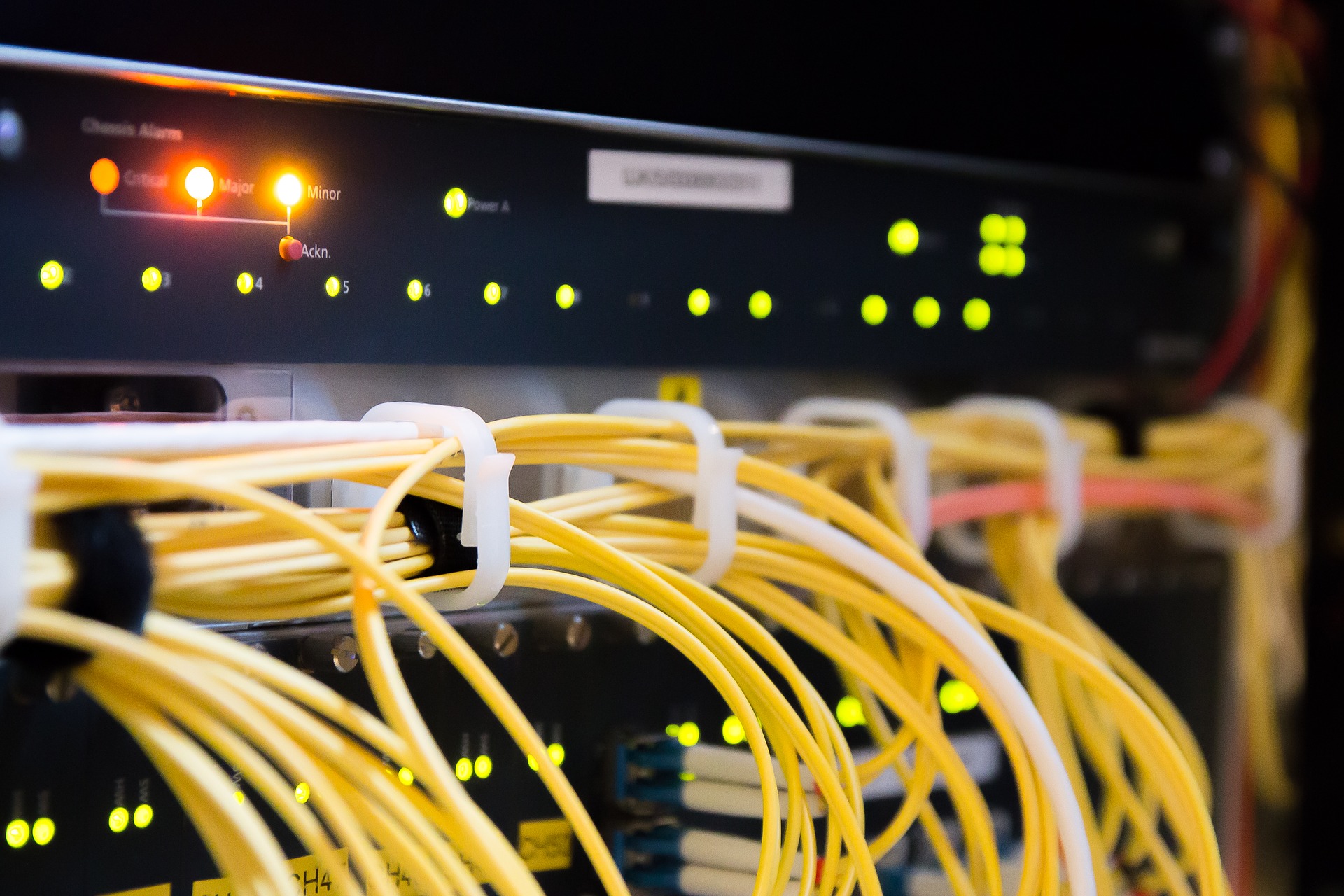
Backbone Networks
High-speed fibre backbone cabling connecting communications rooms, cabinets and multiple buildings.

Whether you’re connecting multiple buildings, upgrading a data centre or installing high-speed backbone cabling, our experienced engineers deliver reliable fibre optic cabling installations across England, Scotland and Wales.
We design, install, terminate, splice, test and certify both multimode and single mode fibre optic cabling for offices, schools, hospitals, warehouses, industrial facilities and commercial premises.
✔ Fibre optic installation
✔ Fibre splicing
✔ Testing & certification
✔ Backbone cabling
✔ Data centres
✔ Campus networks
Fibre optic cabling is the preferred solution for organisations requiring fast, reliable network connectivity over longer distances. It provides significantly higher bandwidth than traditional copper cabling, making it ideal for business-critical applications, campus environments, data centres and multi-building commercial sites.
Unlike copper cabling, which is generally limited to around 90 metres for network outlets, fibre optic cabling can connect buildings and communications cabinets over much greater distances while maintaining exceptional performance. This makes fibre the ideal backbone infrastructure for modern commercial networks and future business growth.
The two main categories of fibre optic cabling are multimode (OM) and single mode (OS), each designed for different transmission distances and network requirements. The sections below explain the differences and help identify the most suitable option for your installation.
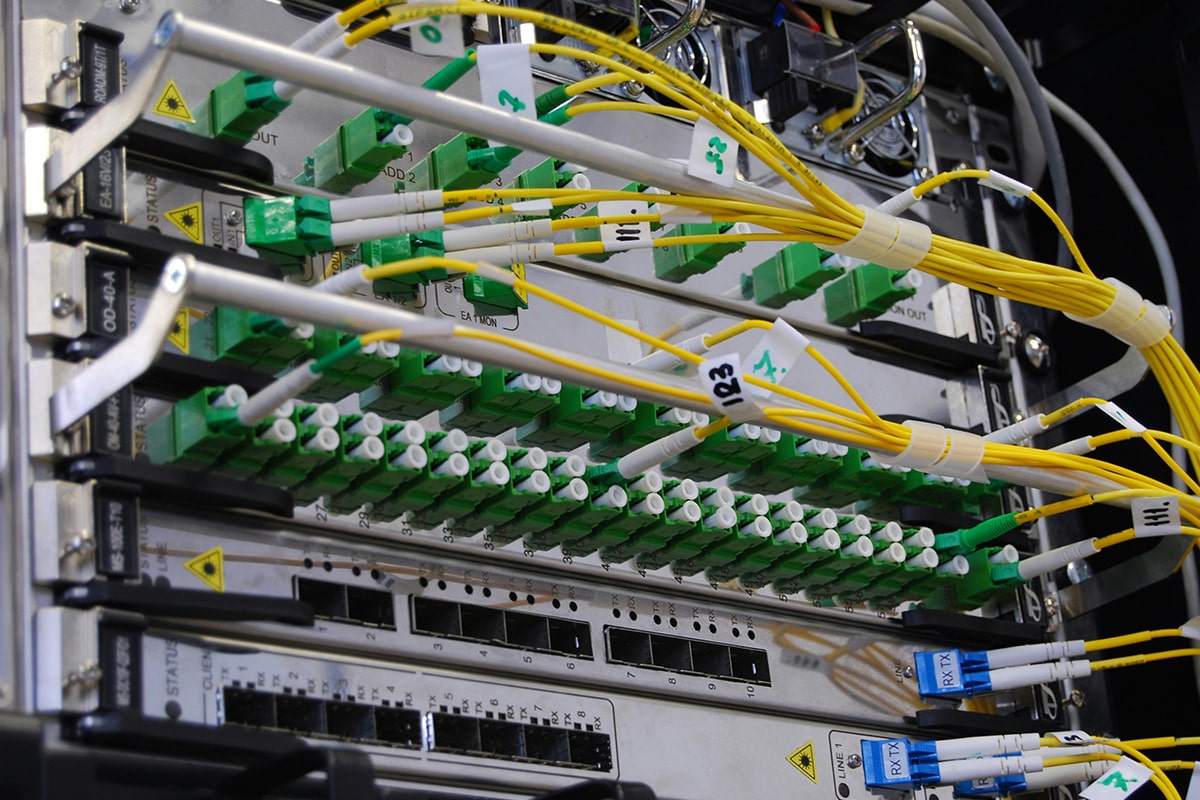
The fibre optic cables are divided into the following categories:
High-speed fibre backbone cabling connecting communications rooms, cabinets and multiple buildings.
Reliable, future-ready fibre infrastructure supporting today’s demanding business applications.
Professional fibre optic cabling installation for commercial buildings, campuses and industrial sites.
Every installation is fully tested and certified to ensure optimum network performance.
From small office upgrades to large multi-building campus networks, Data Cabling Installations provides reliable fibre optic cabling services for organisations across the UK. Every installation is carefully planned, professionally installed and fully tested to ensure long-term performance.
OM4 fibre became available in 2005, basically as a souped-up version of the already pretty good OM3 fibre. The big deal with OM4 is that it brings some clarity for buyers since all manufacturers use the same name. So, you know what you’re getting.
Although OM4 looks just like OM3 with its aqua jacket, it’s got some serious upgrades. It’s tailored for VSCEL laser tech, which means it can handle data flying around at up to 10 Gigabits per second. Plus, it can do this over longer distances – 550 meters compared to the 300 meters of OM3.
One of the best things about OM4 is its bandwidth. Basically, it can handle far more data at once compared to OM3. OM4’s got more than double the bandwidth, making it perfect for tasks that need super-fast data transfer.
OM3 fibre is still suitable for most uses, supporting speeds from 10Gb/s up to 100Gb/s. But if you need longer distances and more bandwidth, OM4 is the way to go.
Then there’s OM5 fibre, which takes things even further. Over longer distances, it’s designed for even higher speeds, like 40Gb/s and 100Gb/s. Basically, it’s all about maximizing bandwidth for 50µm fibre. OM5 fibre is not easily available currently.
Every fibre optic installation is carefully planned to minimise disruption while delivering a fast, reliable network that is built to perform for years to come.
We assess your building, existing infrastructure and future network requirements to determine the most suitable fibre optic solution.
Our engineers design the cable routes, containment, cabinet locations and backbone infrastructure to ensure maximum performance and future scalability.
We install, terminate and splice single mode or multimode fibre optic cabling using industry best practices and high-quality components.
Every fibre optic link is fully tested using professional certification equipment, including OTDR testing where required, to verify performance and compliance.
Once testing is complete, we provide the results, ensure everything is operating correctly and remain available for future additions, upgrades and support.
Whether you’re installing a new backbone network, connecting multiple buildings or upgrading your existing infrastructure, our experienced engineers can help.
✔ Nationwide commercial installations
✔ Free quotations
✔ Experienced fibre optic specialists
Get in touch today to discuss your fibre optic cabling project.
Fibre optic cabling is a high-speed networking solution that transmits data using pulses of light rather than electrical signals. This allows businesses to achieve significantly faster data transfer speeds, greater bandwidth and much longer transmission distances than traditional copper cabling.
It is commonly used to connect communications cabinets, data centres and multiple buildings, providing the backbone for modern commercial networks. Fibre optic cabling is also immune to electromagnetic interference, making it an excellent choice for environments with heavy machinery or electrical equipment.
At Data Cabling Installations, we design and install both multimode and single mode fibre optic cabling for offices, schools, hospitals, warehouses, industrial sites and commercial premises throughout England, Scotland and Wales. Every installation is completed to industry standards and fully tested before handover.
Copper cabling remains an excellent solution for connecting workstations, telephones and network outlets within a building. However, when greater distances, higher bandwidth or faster network speeds are required, fibre optic cabling is usually the better option.
Most copper Ethernet installations are limited to around 90 metres. Fibre optic cabling can transmit data over hundreds of metres or even kilometres while maintaining exceptional performance. This makes it ideal for linking communications cabinets, connecting multiple buildings, supporting data centres and providing high-speed backbone infrastructure.
If you’re planning a new commercial network or expanding an existing one, our engineers can advise whether fibre optic or copper cabling is the most cost-effective solution for your requirements.
Yes. Our engineers install, terminate, splice and certify both single mode (OS1 and OS2) and multimode (OM3 and OM4) fibre optic cabling.
Multimode fibre is commonly used within commercial buildings and campus environments where high-speed communication is required over shorter distances. Single mode fibre is designed for much longer distances and is often used between buildings, across industrial sites and for larger commercial networks.
Choosing the correct fibre type depends on several factors, including cable length, required bandwidth, future expansion plans and your existing network infrastructure. We’ll recommend the most suitable solution based on your project and explain the advantages of each option before work begins.
We provide commercial fibre optic cabling installations for organisations throughout the UK across a wide variety of sectors.
Our engineers regularly work within offices, schools, colleges, universities, hospitals, healthcare facilities, warehouses, factories, manufacturing plants, distribution centres, retail premises, commercial developments and data centres.
Every installation is carefully planned around your business operations to minimise disruption while ensuring the finished network is reliable, scalable and capable of supporting future growth.
Whether you require a single fibre link between communications cabinets or a complete fibre backbone for a large commercial campus, we have the experience to deliver a professional installation.
Yes. Every fibre optic installation is professionally tested to ensure it performs exactly as intended before the project is completed.
Depending on your requirements, we carry out fibre continuity testing, light loss testing and OTDR (Optical Time Domain Reflectometer) testing to verify the quality of every fibre link. Testing confirms that the installation meets the required performance standards and helps identify any faults before the network goes live.
Where requested, we also provide certification and test documentation, giving you confidence that your fibre optic infrastructure has been installed and verified to professional standards.
Absolutely. Much of our work involves upgrading existing commercial premises while businesses continue operating as normal.
Our engineers carefully plan cable routes, containment systems and installation schedules to minimise disruption to staff and day-to-day operations. Whether we’re extending an existing network, replacing ageing fibre infrastructure or installing a completely new backbone system, we work efficiently and professionally throughout the project.
We regularly install fibre optic cabling in occupied offices, schools, healthcare facilities, warehouses and industrial buildings across the UK.
Yes. Data Cabling Installations provides commercial fibre optic cabling services throughout England, Scotland and Wales.
Our engineers travel nationwide to deliver projects ranging from small office upgrades to large multi-site commercial installations. Because we work across the UK, many organisations choose us when they require a consistent standard of installation across multiple locations.
Whether your project involves one building or several sites, we can provide experienced engineers, professional project management and fully tested fibre optic installations wherever your business is located.
Yes. Fibre optic cabling is the preferred method for linking separate buildings because it provides high-speed communication over much greater distances than copper cabling.
We regularly install fibre backbone links between office buildings, warehouses, production facilities, schools, campus environments and other commercial properties. These fibre links allow data, voice, security systems and business-critical applications to communicate quickly and reliably between buildings.
Every installation is designed to support your current network requirements while allowing for future expansion as your organisation grows.
Every project is different, so installation times depend on factors such as the size of the building, the number of fibre links required, cable routes and the complexity of the network design.
Smaller installations can often be completed within a day, while larger commercial projects involving multiple buildings or extensive backbone cabling may take several days or longer.
Before work begins, we carry out a survey and provide a clear quotation together with an estimated programme of works, allowing you to plan around the installation with confidence.
Yes. If your existing fibre optic infrastructure no longer meets your business requirements, we can upgrade, extend or modify it without necessarily replacing the entire network.
Typical upgrade projects include adding new fibre links, increasing network capacity, relocating communications cabinets, extending networks into new buildings and replacing outdated fibre infrastructure with higher-performance cabling.
Our engineers will assess your existing installation and recommend the most practical and cost-effective approach for improving your network performance.
Yes. We offer free, no-obligation quotations for commercial fibre optic cabling projects throughout England, Scotland and Wales.
Following an initial discussion, we can advise on the most suitable fibre solution for your organisation, explain the installation process and provide a competitive quotation based on your requirements. Where necessary, we can also arrange a site survey to assess existing infrastructure and discuss the best approach for your project.
Whether you’re planning a new office, upgrading a warehouse network or connecting multiple buildings, we’re happy to help you find the right fibre optic cabling solution.
When it comes to OS (Optical Single mode) cables, they’re typically available in two flavours: OS1 or OS2 builds. OS1 is a bit antiquated. It is designed for distances less than 2 kilometres, and it reaches a top transmission speed of 10Gbps. For jobs within that range, there are usually OM designs that are more cost-effective. OS2 is the standard for long-range networking. The cables can carry signals up to 200 kilometres and achieve transmission rates of more than 10Gbps.
OS2 Single mode fibre is now the go-to for long-range, high-speed networks.