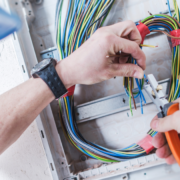
Why Data Cabling Should Be Part of Your Office Fit-Out Plan (Not an Afterthought)
When planning an office fit-out, most attention goes to what people can see: furniture, décor, lighting, and layout. But behind every modern workspace is something far more important – office fit-out data cabling.
Your cabling infrastructure is the backbone of your business. It connects computers, phones, Wi-Fi access points, printers, servers, CCTV systems, and cloud services. Yet too often, data cabling is treated as an afterthought – installed late, rushed, or squeezed into whatever space remains once the office looks “finished”.
In this post, we’ll explain why data cabling must be designed alongside your office fit-out, how early planning improves performance and safety, and what to consider before your project begins.

Why Office Fit-Out Data Cabling Is So Important
Data cabling doesn’t just support your IT systems – it defines how your office functions day to day.
When cabling is planned properly during a fit-out, it allows you to:
-
Position desks and meeting rooms without limitations
-
Provide reliable wired and wireless connectivity everywhere it’s needed
-
Avoid trailing leads, surface-mounted trunking, and clutter
-
Support future technologies without rework
-
Keep server rooms, cabinets, and comms areas organised and compliant
By contrast, when cabling is left until the end, engineers are forced to work around finished ceilings, walls, furniture, and flooring — which almost always leads to compromises in performance, appearance, and long-term reliability.

The Hidden Costs of Treating Cabling as an Afterthought
Poor cabling decisions don’t just affect aesthetics – they impact productivity, safety, and budgets.
1. Disruption and Downtime
Installing or modifying cabling after staff have moved in often means moving desks, disconnecting equipment, and working around people. This leads to downtime, frustration, and lost productivity.
2. Limited Cable Routes
Once ceilings, partitions, and floors are sealed, access becomes restricted. Engineers may be forced to take longer routes, run cables near power lines, or surface-mount containment – none of which is ideal.
3. Reduced Network Performance
Tight bends, excessive cable lengths, electrical interference, or poor termination all degrade performance. These issues are far more common when cabling is rushed or retrofitted.
4. Increased Long-Term Costs
Fixing cabling problems after a fit-out is far more expensive than doing it properly the first time. Reworking routes, opening walls, or replacing short or damaged runs adds unnecessary cost.

How to Integrate Data Cabling Into Your Office Fit-Out Plan
1. Start With a Professional Site Survey
Before construction or decoration begins, a certified cabling installer should assess the space. This includes reviewing floor plans, desk layouts, meeting rooms, comms rooms, and equipment requirements.
A proper survey ensures data cabling routes are planned logically and efficiently from day one.
2. Coordinate With Designers and Electricians
Office fit-outs work best when trades collaborate. Your cabling installer should coordinate with:
-
Interior designers
-
Electrical contractors
-
Fit-out teams
-
IT providers
This avoids clashes between lighting, power, furniture, and data points – and ensures everything ends up exactly where it’s needed.
3. Design for Flexibility and Growth
Modern offices change constantly. Teams grow, desks move, and technology evolves.
Best practice is to install at least 20% more data outlets than you currently need. This allows future expansion without disruptive rework.
4. Choose the Right Cabling Standard
For new offices, Cat6a cabling is the recommended minimum. It supports 10 Gbps speeds, modern Wi-Fi access points, VoIP systems, and Power over Ethernet (PoE) devices.
For safety and compliance, LSZH (Low Smoke Zero Halogen) cabling should be used in commercial environments.
5. Test, Label, and Document Everything
Once installed, all data cabling should be:
-
Fluke-tested
-
Clearly labelled at both ends
-
Documented with a cabling map
This makes future maintenance, troubleshooting, and upgrades far easier.

The Benefits of Getting Office Fit-Out Data Cabling Right
When data cabling is part of the fit-out plan from the start, the benefits are immediate and long-term:
-
Cleaner design: No visible cables or ad-hoc fixes
-
Better performance: Every device operates at full speed
-
Easier maintenance: Clear labelling and tidy cabinets
-
Lower costs: No need for rework after move-in
-
Future-proofing: Simple upgrades as technology evolves
A well-cabled office doesn’t just look better – it works better.
When Should You Involve a Cabling Installer?
Ideally, your data cabling contractor should be involved as soon as the office layout is drafted – before walls, ceilings, or flooring are installed.
At this stage, they can plan routes for:
-
Data outlets
-
Wi-Fi access points
-
Server rooms and cabinets
-
Power and data separation
-
Containment and trunking
Early involvement ensures a clean handover and avoids costly surprises late in the project.

FAQs: Office Fit-Out Data Cabling
Q1: Should data cabling be installed before or after decorating?
Always before. Installing cabling after decorating increases disruption, limits routing options, and raises costs significantly.
Q2: Can existing cabling be reused during a fit-out?
Sometimes. Existing cabling can be reused only if it meets current standards (Cat6 or above) and passes full testing. Otherwise, upgrading while access is easy is the smarter choice.
Q3: How many data points should each desk have?
A minimum of two per workstation is recommended – one primary and one spare – plus shared outlets for printers, phones, and Wi-Fi access points.
Q4: What type of cabling is best for new offices?
Cat6a cabling is ideal for modern offices. It supports high-speed networking, PoE devices, and future technologies with excellent reliability.
Q5: Is testing really necessary after installation?
Yes. Certification testing confirms every cable meets performance and safety standards and ensures the network is ready before staff move in.

Conclusion: Plan Cabling Early, Avoid Problems Later
An office fit-out is the perfect opportunity to get your data cabling right. When office fit-out data cabling is planned alongside design and construction, you avoid disruption, reduce costs, and create a workspace that’s reliable, flexible, and future-ready.
Need Help With Office Fit-Out Data Cabling?
If you’re planning an office fit-out – or refurbishing an existing workspace – involve your data cabling team early.
👉 Speak to our team about office fit-out data cabling
We design, install, test, and certify structured cabling systems across the UK, working closely with designers, electricians, and fit-out contractors to deliver clean, high-performance networks.
📞 Contact us via our Contact Us page to discuss your project.