
The Role of Structured Cabling in Smart Buildings
Smart buildings are no longer a futuristic concept reserved for tech campuses and flagship offices. From offices and hotels to schools, care homes, and mixed-use developments, smart building technology is now becoming the standard.
Automated lighting, intelligent climate control, occupancy sensors, access control, energy monitoring, and connected security systems all promise greater efficiency, comfort, and sustainability. But behind every “smart” function sits something far less visible — and far more critical:
Structured cabling.
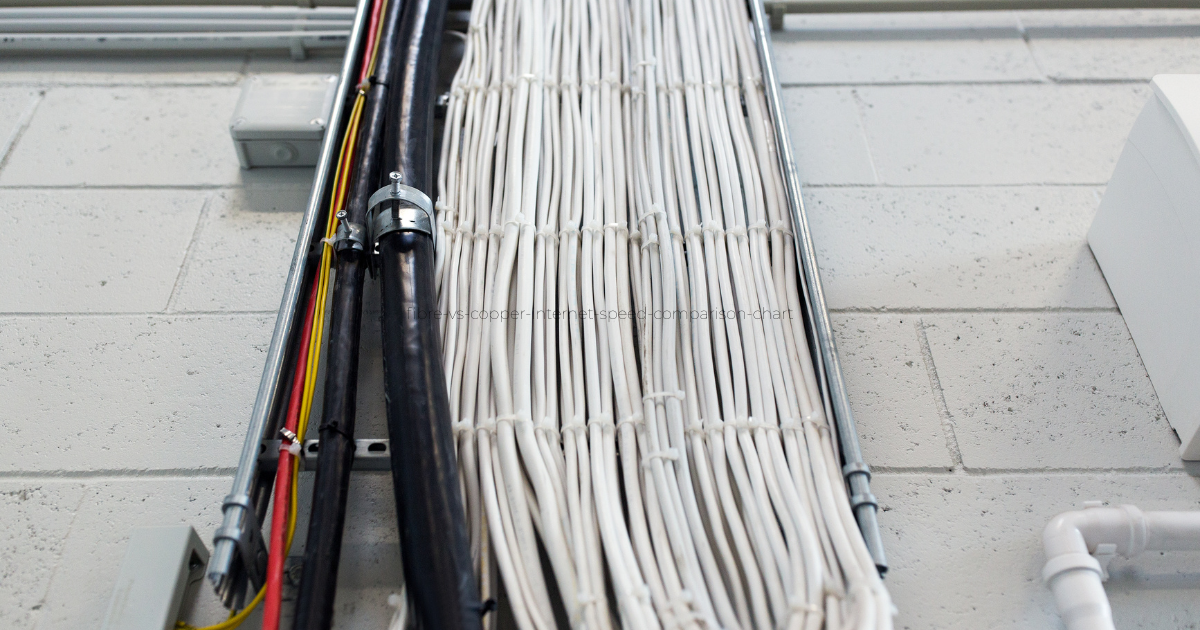
Behind the dashboards, apps, and sensors, thousands of data cables quietly connect devices, controllers, and management platforms, allowing systems to communicate in real time. Without a robust structured cabling infrastructure, smart building systems simply cannot operate reliably.
In this post, we’ll explore the role of structured cabling in smart buildings, why it’s essential for performance and scalability, and what needs to be considered when designing a future-ready intelligent building network.

What Is a Smart Building?
A smart building uses connected devices, sensors, and control systems to automatically monitor, manage, and optimise how the building operates.
Typical smart building systems include:
-
Heating, ventilation, and air conditioning (HVAC)
-
Intelligent lighting and shading
-
Access control and CCTV
-
Energy monitoring and optimisation
-
Occupancy and environmental sensors
-
Wi-Fi, IoT, and building management systems (BMS)
These systems rely on constant data exchange between endpoints and central platforms. That data has to travel somewhere — and that “somewhere” is the structured cabling network.
Structured cabling provides the physical foundation that allows smart building technology to function consistently, securely, and at scale.
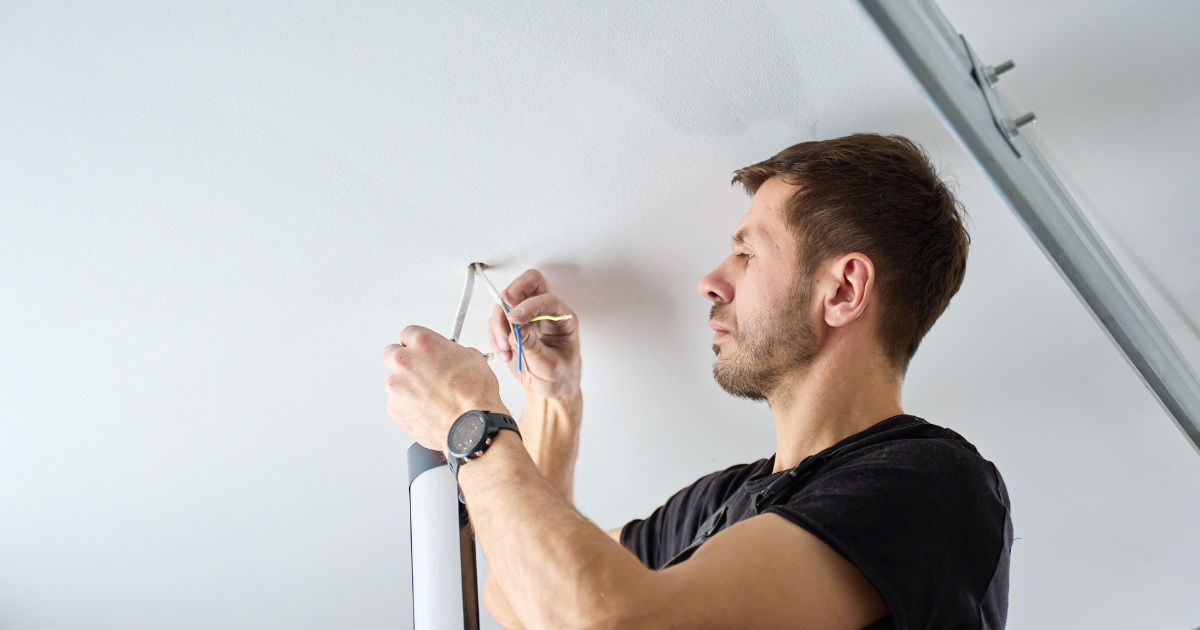
Structured Cabling: The Backbone of Building Intelligence
Structured cabling is a standardised approach to network infrastructure using defined cable types, layouts, and connection points. In smart buildings, it delivers several critical advantages:
-
Reliable connectivity between sensors, controllers, and management software
-
Consistency through standardised cabling routes and termination points
-
Scalability, allowing new systems to be added without rewiring
-
High availability, ensuring 24/7 uptime for critical building services
Whether it’s a temperature sensor adjusting airflow, lights dimming in an empty room, or access logs being recorded in real time, every command and data packet moves across the structured cabling system.
Without it, “smart” systems quickly become unreliable, fragmented, and difficult to manage.
Smart Building Systems That Depend on Structured Cabling
1. Environmental and HVAC Control
Smart HVAC systems use sensors to monitor temperature, humidity, air quality, and occupancy. These sensors feed data back to controllers that adjust heating, cooling, and ventilation automatically.
Structured cabling ensures:
-
Low-latency communication between sensors and controllers
-
Reliable PoE power delivery
-
Centralised management through BMS platforms
2. Intelligent Lighting and Occupancy Detection
Modern LED lighting systems increasingly use Power over Ethernet (PoE) rather than traditional electrical circuits. Lighting fixtures, sensors, and controllers are all connected via structured cabling.
This enables:
-
Centralised lighting control
-
Automated dimming based on occupancy or daylight
-
Reduced energy consumption
-
Simplified maintenance
3. Access Control and CCTV
Smart access control systems — card readers, biometric scanners, intercoms, and IP cameras — rely heavily on structured cabling for secure data and power delivery.
Compared to analogue systems, IP-based security supported by Cat6a cabling offers:
-
Higher image quality
-
Remote monitoring
-
Easier scalability
-
Better system resilience
4. Energy Management and Monitoring
Smart meters and sub-meters track electricity, water, and gas usage across different zones of a building. This data is transmitted over structured cabling to central dashboards for analysis and optimisation.
Accurate energy data supports:
-
Carbon reduction initiatives
-
Cost control
-
Predictive maintenance
-
Compliance reporting
5. Wi-Fi, IoT, and Sensor Networks
Thousands of IoT devices may exist in a smart building — from desk occupancy sensors to air-quality monitors.
While devices may connect wirelessly at the edge, every access point still depends on a wired structured cabling backbone to deliver bandwidth, security, and reliability.
Why Structured Cabling Is Ideal for Smart Buildings
Structured cabling is uniquely suited to smart environments because it supports:
High-Speed Data Transmission
Cat6a and fibre optic cabling handle the high data volumes generated by smart systems without latency or packet loss.
Power over Ethernet (PoE)
PoE allows devices such as cameras, lights, sensors, and access readers to receive both power and data over a single cable — reducing electrical infrastructure and energy waste.
Centralised Management
Structured cabling enables all systems to feed into unified control platforms rather than operating in silos.
Reduced Energy Consumption
Low-voltage PoE systems and efficient data transmission reduce heat, power loss, and overall energy demand.
Future-Proofing
Smart building technology evolves quickly. Structured cabling provides the headroom needed to support new devices and platforms for 10–15 years or more.

Cabling Design Considerations for Smart Buildings
1. Plan Cabling Early
Structured cabling must be designed alongside architectural, mechanical, and electrical plans — not added at the end. Early planning ensures efficient routes, correct containment, and proper separation from power.
2. Use a Hybrid Copper and Fibre Architecture
-
Fibre optic cabling is ideal for building backbones, risers, and long distances
-
Cat6a (or higher) connects endpoints such as sensors, switches, access points, and controllers
This hybrid approach balances performance, cost, and scalability.
3. Segment Networks for Security
Smart buildings generate sensitive operational data. Segmented networks help isolate:
-
Building management systems
-
Security and access control
-
Corporate IT networks
-
Guest Wi-Fi
Structured cabling supports clean physical separation and logical segmentation.
4. Build in Spare Capacity
Smart buildings grow over time. Installing spare cabling, rack space, and containment prevents disruptive retrofits later.
5. Label and Document Everything
Clear labelling, port identification, and digital schematics are essential. Smart buildings often outlive the teams that built them — documentation ensures continuity.
Structured Cabling and Sustainability in Smart Buildings
Smart buildings aim to reduce environmental impact — and structured cabling plays a key role in achieving that goal.
-
Energy-efficient PoE systems reduce electrical infrastructure
-
Durable, high-performance cabling lasts longer, reducing waste
-
Centralised monitoring enables real-time energy optimisation
-
Fewer rewires mean lower material consumption over time
A properly designed structured cabling system doesn’t just enable smart features — it actively supports sustainability targets.
Q1: What cabling standard should a smart building use?
Most modern smart buildings should be designed around Cat6a structured cabling for horizontal runs, combined with fibre optic cabling for building backbones and inter-floor connections.
Cat6a supports high-speed data transmission (up to 10Gbps), reliable Power over Ethernet (PoE) delivery, and strong resistance to interference — all essential for IoT sensors, smart lighting, access control, and CCTV systems. Fibre optic cabling is ideal for longer distances and high-capacity links between floors, risers, or separate buildings, ensuring performance and scalability for years to come.
This hybrid approach offers the best balance of speed, reliability, and future-proofing for smart building infrastructure.
Q2: Can existing buildings be upgraded to smart systems?
Yes — existing buildings can absolutely be upgraded to support smart building technology through structured cabling retrofits.
In many cases, installers can reuse existing containment, risers, or ceiling voids to introduce new cabling with minimal disruption. Wireless sensors and PoE-powered devices also reduce the need for additional electrical work. A professional cabling survey will identify which existing cables can be reused, which should be replaced, and how to phase the upgrade to avoid downtime.
Smart upgrades are increasingly common in offices, schools, hospitals, hotels, and commercial buildings where full redevelopment isn’t practical.
Q3: How many devices can a PoE network support in a smart building?
The number of devices a PoE network can support depends on several factors, including switch capacity, total power budget, cable quality, and network design.
A well-planned PoE infrastructure can support hundreds of endpoints, such as smart lighting fixtures, IP cameras, door controllers, occupancy sensors, and Wi-Fi access points — all powered and connected through structured cabling. Using high-quality Cat6a cabling and PoE++ switches ensures consistent power delivery without voltage drop or performance issues.
Proper planning is essential to balance power loads and avoid overloading switches as smart systems expand.
Q4: Does structured cabling reduce maintenance and operational costs?
Yes. One of the biggest advantages of structured cabling in smart buildings is lower long-term maintenance costs.
Standardised cabling layouts, clear labelling, and proper documentation make faults easier to trace and resolve. This reduces the need for emergency call-outs, shortens downtime, and allows maintenance teams to work more efficiently. Certified cabling also reduces the risk of intermittent faults caused by poor terminations or signal interference.
Over the lifespan of a smart building, these efficiencies can deliver significant operational savings.
Q5: Is fibre optic cabling essential for all smart buildings?
Fibre optic cabling isn’t required everywhere — but it plays a critical role in many smart building designs.
Fibre is essential for large buildings, multi-floor developments, campuses, and sites with high data volumes, where long-distance performance and future scalability are priorities. In smaller buildings, Cat6a cabling may be sufficient for most endpoints, with fibre used selectively for core links or external connections.
The most effective smart buildings typically use a blended copper-and-fibre network, ensuring performance today while remaining ready for future technologies.

Conclusion: Smart Buildings Need Smart Foundations
Smart buildings don’t succeed because of apps or dashboards alone. They succeed because the physical network underneath is designed to support intelligence, automation, and growth.
Structured cabling provides the reliability, flexibility, and performance that smart buildings demand. When planned early and installed professionally, it ensures systems integrate smoothly, operate efficiently, and remain future-ready.
Planning a smart building project or upgrade?
Structured cabling should be at the heart of your design — not an afterthought.
👉 Speak to our team about structured cabling for smart buildings
We design, install, test, and certify intelligent cabling infrastructures across the UK, supporting smart offices, education, healthcare, hospitality, and commercial developments.